
Have you ever wondered what goes on in the mind of someone living with bipolar disorder? Understanding how a person with bipolar disorder thinks can help us become more patient and supportive toward them. Bipolar disorder is a mental health condition that affects a person’s mood, energy, behavior, and thought patterns. It can influence how someone sees situations, makes decisions, and responds to everyday experiences.
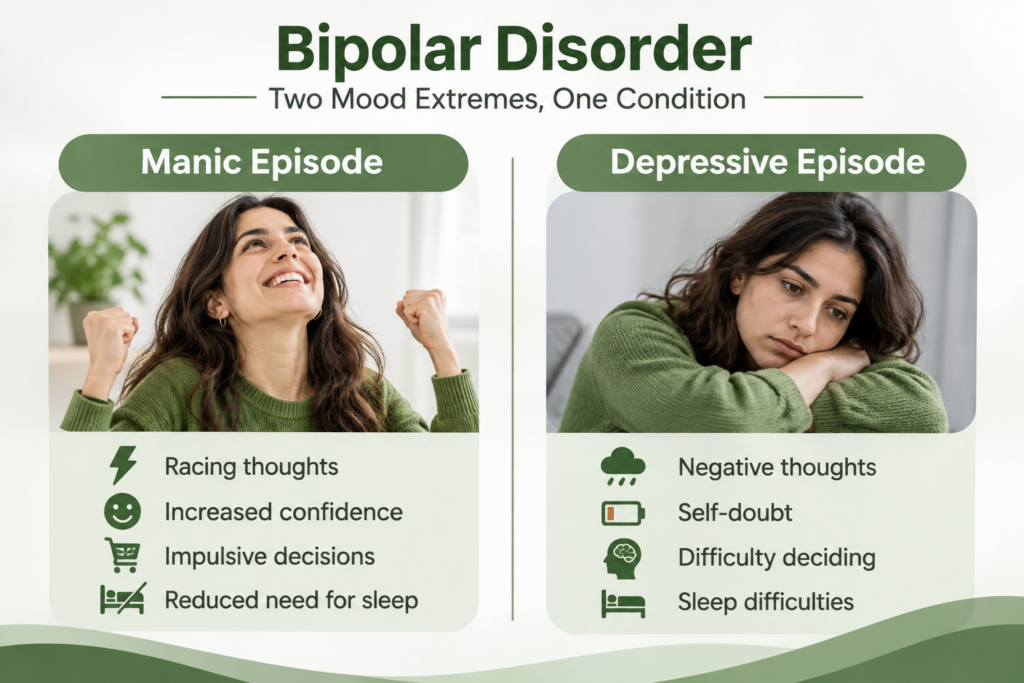
During manic episodes, a person may experience racing thoughts, unusual confidence, and impulsive ideas. During depressive episodes, they may struggle with negative thinking, self-doubt, and feelings of hopelessness. These changes can make everyday life challenging, both for the person and their loved ones.
However, how a person with bipolar disorder thinks is not the same all the time. Each person’s experience is different, and understanding these changes is an important step toward offering the right support.
What Is Bipolar Disorder and How Does It Affect the Mind?
Bipolar disorder is a mental health condition that causes major changes in a person’s mood, energy, and activity levels. These changes can also affect how someone thinks, makes decisions, and responds to everyday situations. A person may experience periods of unusually high energy followed by periods of deep sadness or low motivation.
There are three important mood states to understand:
- Mania: During a manic episode, a person may feel extremely energetic, confident, or irritable. Their thoughts may move quickly, and they may make decisions without thinking about the consequences.
- Depression: During a depressive episode, thoughts may become negative. A person may struggle with guilt, hopelessness, low self-esteem, and difficulty concentrating.
- Stable periods: Between mood episodes, many people experience more balanced moods and clearer thinking. They may return to their usual daily activities and routines.
What Are the Different Types of Bipolar Disorder?
The two main types commonly discussed are Bipolar I disorder and Bipolar II disorder. Other related conditions, such as cyclothymic disorder and other specified or unspecified bipolar and related disorders, are also recognized.
- Bipolar I disorder: Involves at least one manic episode, which may cause significant changes in mood, energy, behaviour, and daily functioning. Some people with Bipolar I also experience depressive episodes.
- Bipolar II disorder: Involves at least one hypomanic episode and at least one major depressive episode, with no history of a full manic episode. Hypomania involves increased energy, activity, or confidence, but is less severe than mania.
Understanding these differences is important because not everyone with bipolar disorder experiences full manic episodes. The way a person thinks and behaves can vary depending on their diagnosis and mood state.
For more information about bipolar disorder, its types, and symptoms, read the NHS guide to bipolar disorder.
How Long Do Bipolar Mood Episodes Last?
Bipolar mood episodes do not usually involve sudden mood changes every few minutes. Their duration can vary depending on the person and the type of episode.
A manic episode generally lasts at least seven days, but it may be shorter if symptoms are severe enough to require hospital care. A hypomanic episode lasts at least four consecutive days, while a depressive episode typically lasts at least two weeks.
Between episodes, a person may experience more stable moods and return to their usual routine. However, the duration and frequency of episodes differ from person to person.
These changes can affect work, relationships, and everyday life. However, symptoms and experiences vary from person to person. Understanding these mood changes helps explain how a person with bipolar disorder thinks in different situations.
How Does a Person with Bipolar Disorder Think During a Manic Episode?
During a manic episode, a person with bipolar disorder may experience unusually high energy, excitement, or irritability. Their mind may feel very active, making it difficult to slow down, focus, or think through situations calmly. They may have many ideas, make big plans, or feel more confident than usual. However, these changes can also affect their judgment and everyday decisions.
Understanding how a person with bipolar disorder thinks during mania helps explain why their behavior may sometimes seem unusual to family and friends.
Racing Thoughts and Rapid Ideas
One common experience during mania is racing thoughts. A person’s mind may move quickly from one idea to another, making it difficult to focus on a single subject. They may start talking about one thing and suddenly move to something completely different.
For example, someone may begin planning a holiday, then suddenly think about starting a business or changing their career. These ideas may feel exciting and important, even when they are difficult to organize or complete.
Rapid thoughts can also affect the way a person communicates. During mania, someone may speak very quickly, move from one topic to another, or interrupt conversations because they have many ideas they want to express. They may also become easily distracted by sounds, activities, or thoughts around them, making it difficult to stay focused on one thing.
Feeling Extremely Confident or Powerful
During a manic episode, some people develop an unusually high sense of confidence. They may believe they can achieve almost anything or handle several major tasks without difficulty. They might also make plans that are much bigger than their usual goals.
For instance, someone may suddenly feel ready to start several businesses or take on responsibilities they would normally consider unrealistic. This feeling can be enjoyable at first, but it may also lead to disappointment or problems later.
Impulsive Thinking and Risky Decisions
Mania can affect a person’s ability to judge risks and consequences. They may act on their thoughts without taking enough time to consider what could happen next. This can include spending large amounts of money, making sudden life changes, or taking unnecessary risks.
A person may feel that their decisions are completely reasonable at the time. However, they may later realize that they acted too quickly or overlooked important details.
Reduced Need for Sleep and Increased Mental Energy
Another common sign of mania is needing less sleep without feeling tired. A person may sleep only a few hours and still wake up feeling energetic and ready to do many things. Their mind may remain active even when it is time to rest.
For example, they might stay awake late at night working on new ideas, making plans, or starting different activities. Over time, this lack of sleep and increased activity can affect their daily routine and well-being.
Not everyone experiences mania in the same way. Some people may feel excited, while others become restless or easily irritated. According to the National Institute of Mental Health (NIMH), racing thoughts, increased energy, reduced need for sleep, and unusually high confidence are common signs of a manic episode.
How Does a Person with Bipolar Disorder Think During a Depressive Episode?
During a depressive episode, a person with bipolar disorder may experience sadness, low energy, and a loss of interest in everyday activities. Their thinking can also become more negative, making even simple situations feel difficult. They may blame themselves, worry about the future, or feel that nothing will get better. Understanding how a person with bipolar disorder thinks during depression can help loved ones respond with patience instead of judgment.
Negative Thoughts and Feelings of Worthlessness
One common experience during bipolar depression is having negative thoughts about oneself. A person may feel guilty about past mistakes, question their abilities, or believe they are not good enough. Even small problems can make them feel like they have failed.
For example, someone may make a minor mistake at work and spend hours thinking they are not capable of doing anything right. These feelings can lower their confidence and make daily responsibilities harder to manage.
Overthinking and Persistent Worry
During depression, some people repeatedly think about upsetting situations or past experiences. They may worry about things they cannot change or imagine the worst possible outcome of everyday problems. This pattern of repeated negative thinking is often called rumination.
For instance, a person may keep thinking about an argument with a friend, wondering what they said wrong or why the other person is upset. Even when the situation is over, their mind may continue returning to it, making it difficult to relax or focus on something positive.
Difficulty Concentrating and Making Decisions
Depression can affect concentration, memory, and decision-making. A person may find it difficult to follow a conversation, remember simple details, or complete tasks that once felt easy.
For example, choosing what to cook, replying to messages, or finishing a work assignment may feel overwhelming. They may take longer to make decisions because their thoughts feel slow or unclear. This does not mean they are lazy or careless; these difficulties can be part of the condition.
Memory difficulties can also occur during depressive episodes. Some people may struggle to remember recent conversations, recall information, or keep track of everyday tasks. These problems can make work, studies, and daily responsibilities more challenging. They are not a sign of laziness or a lack of effort.
Changes in Sleep and Appetite
Depressive episodes can also affect a person’s sleeping and eating habits. Some people may sleep much longer than usual, while others struggle with insomnia or wake up frequently during the night. Appetite may also decrease or increase, leading to changes in eating patterns. These physical changes can contribute to low energy and make everyday activities feel even more difficult.
Hopelessness and Loss of Motivation
During a depressive episode, a person may struggle to imagine a better future. They might feel that their problems will never improve or that their efforts will not make a difference. Activities they once enjoyed may no longer bring happiness.
As a result, they may avoid social gatherings, spend more time alone, or lose interest in hobbies. Some people may also experience thoughts of death or suicide. These thoughts should always be taken seriously, and immediate professional support is important if someone may be at risk.
According to the World Health Organization (WHO), depressive episodes can involve poor concentration, low self-worth, hopelessness, and low energy. However, these experiences vary from person to person, and appropriate mental health care can help manage symptoms.
Can a Person with Bipolar Disorder Experience Both Types of Thoughts at Once?
Yes. A person with bipolar disorder can sometimes experience symptoms of mania and depression at the same time. This is known as having mixed features. During this period, someone may feel sad, hopeless, or anxious while also experiencing racing thoughts, increased energy, or irritability.
For example, a person may have many thoughts running through their mind but feel too upset or overwhelmed to act on them. They might feel restless, struggle to sleep, and become easily frustrated while also dealing with negative emotions.
These mixed symptoms can be especially distressing because the mind and emotions seem to pull in different directions. A person may feel mentally active but emotionally low, making it difficult to relax or manage daily activities.
Understanding how a person with bipolar disorder thinks during mixed episodes is important because these symptoms can be difficult to recognize. If someone experiences these changes, they should seek guidance from a qualified mental health professional. Proper assessment and treatment can help manage these symptoms.
Do People with Bipolar Disorder Think Differently Between Mood Episodes?
Yes, people with bipolar disorder can experience periods when their mood and thinking become more stable. These periods are sometimes called euthymia. During this time, a person may feel more like themselves and find it easier to manage everyday responsibilities, relationships, and work.
Their thoughts may become more balanced, and they may be able to concentrate, make decisions, and plan their day without the difficulties they experienced during manic or depressive episodes. For example, they might return to their normal routine, enjoy hobbies, and spend time with family and friends.
However, stable moods do not always mean that every difficulty disappears. Some people may continue to experience problems with memory, attention, or concentration, even when their mood is stable. These difficulties can vary from person to person.
Understanding how a person with bipolar disorder thinks between mood episodes is important because the condition does not affect everyone in the same way. With appropriate treatment and regular support, many people can maintain a stable routine and manage daily life more comfortably.
Common Misconceptions About Bipolar Disorder
There are several misconceptions about bipolar disorder that can lead to confusion and unfair judgments. Understanding the facts can help people develop a more accurate view of the condition.
- Myth: Bipolar disorder means constant mood swings.
Fact: Mood episodes generally last for days, weeks, or sometimes months. They do not usually involve changing emotions every few minutes. - Myth: Everyone with bipolar disorder behaves unpredictably.
Fact: Symptoms vary from person to person. Many people manage their condition and maintain stable routines with appropriate treatment. - Myth: Bipolar disorder means having multiple personalities.
Fact: Bipolar disorder is a mood disorder that affects emotions, energy, and activity levels. It is different from dissociative identity disorder, which involves distinct identity states.
Understanding these facts can reduce stigma and encourage more compassionate support for people living with bipolar disorder.
Does Bipolar Disorder Affect Relationships and the Way a Person Sees Others?
Yes, bipolar disorder can affect how a person communicates, responds emotionally, and interacts with others. During manic episodes, someone may become more talkative, impatient, or easily irritated. They may also act impulsively, make sudden decisions, or become involved in arguments without fully considering the consequences.
During depressive episodes, the same person may become quiet, avoid social gatherings, or lose interest in spending time with family and friends. They might stop replying to messages or prefer to stay alone. Loved ones may misunderstand this behavior and think the person is ignoring them or no longer cares.
These changes can create confusion, disagreements, and emotional stress in relationships. However, they do not necessarily reflect how the person truly feels about others. Understanding how a person with bipolar disorder thinks during different mood episodes can help family members avoid quick judgments.
Patience, open communication, and emotional support can make a positive difference. Learning about the condition together can also help build stronger and healthier relationships.
What Are Common Thought Patterns in Someone with Bipolar Disorder?
People with bipolar disorder may experience different thought patterns depending on their mood and current episode. These patterns can affect how they understand situations, make decisions, and respond to others. Some common examples include:
- Racing thoughts: Ideas move quickly from one topic to another, making it difficult to focus.
- Grandiose thinking: A person may feel unusually important, powerful, or confident about their abilities.
- Impulsive thoughts: They may feel a strong urge to act quickly without considering possible consequences.
- Negative thinking: During depression, thoughts may involve guilt, self-doubt, or hopelessness.
- Overthinking: A person may repeatedly think about past problems or worry about future situations.
- Distractibility: They may struggle to stay focused on one task or conversation.
Cognitive Distortions That May Affect Thinking
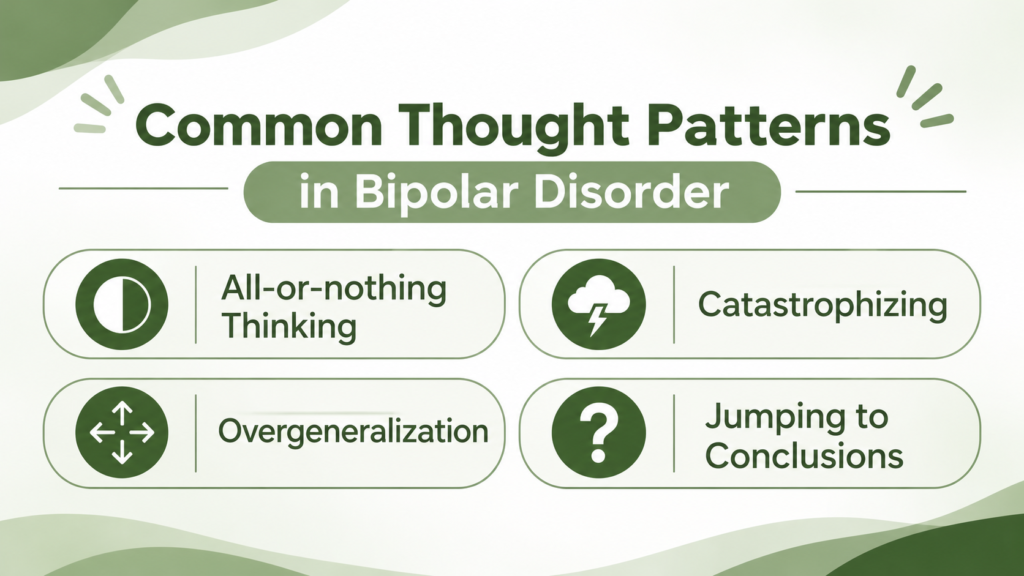
Some people with bipolar disorder may experience unhelpful thinking patterns, often called cognitive distortions. These patterns can influence how they interpret situations, particularly during mood episodes. However, they are not unique to bipolar disorder and cannot be used alone to identify or diagnose the condition.
People sometimes search for a common “bipolar trait,” but there is no single thought pattern that applies to everyone with the condition.
Common examples include:
- All-or-nothing thinking: Seeing situations as completely successful or completely unsuccessful, without considering the middle ground.
- Catastrophizing: Expecting the worst possible outcome, even when there is little evidence to support it.
- Overgeneralization: Believing that one negative experience means everything will go wrong.
- Jumping to conclusions: Making assumptions about people or situations without having enough information.
These thinking patterns can affect confidence, relationships, and decision-making. Recognizing them can help people understand their reactions and develop healthier ways of interpreting situations with support from a mental health professional.
Understanding these patterns helps explain how a person with bipolar disorder thinks during different mood episodes. However, not everyone experiences all these thoughts, and their intensity can vary.
Can a Person with Bipolar Disorder Control Their Thoughts?
Managing thoughts can be difficult for someone with bipolar disorder, especially during manic or depressive episodes. Racing thoughts, strong emotions, negative thinking, and changes in concentration can make it hard to stay calm or think clearly. These experiences are part of the condition and are not simply a matter of willpower.
However, learning to recognize mood changes and personal triggers can help a person manage their symptoms. For example, noticing changes in sleep, energy, or irritability may help identify the early signs of a mood episode. Keeping a mood journal and following a regular sleep routine can also be helpful.
Professional treatment plays an important role in managing bipolar disorder. A psychiatrist may recommend medication, while psychological therapies can help people understand their thought patterns and develop healthy coping skills.
Although a person may not always be able to control every thought, appropriate treatment and ongoing support can help them manage their emotions, make better decisions, and maintain a more balanced daily routine.
How Can You Support Someone with Bipolar Disorder?
Supporting someone with bipolar disorder requires patience, understanding, and kindness. Their thoughts, emotions, and behavior may change during different mood episodes, so it is important to offer support without making them feel judged or misunderstood.
Here are some ways to help:
- Listen without judgment: Give them time to express their feelings. Avoid criticizing or dismissing their experiences.
- Offer emotional support: Remind them that they are not alone and that you are willing to help when they need you.
- Encourage professional treatment: Support them in attending appointments with a psychiatrist and following their recommended treatment plan.
- Help maintain healthy routines: Encourage regular sleep, balanced meals, physical activity, and a consistent daily schedule.
- Recognize warning signs: Notice unusual changes in sleep, energy, mood, or behavior. Encourage professional help if symptoms become worse.
Most importantly, avoid taking every emotional reaction personally. Learning how a person with bipolar disorder thinks can help you understand their experiences and respond with greater compassion. Small acts of patience and support can make a meaningful difference in their lives.
For general information about emotional well-being and the services offered by Bless Homeopathy, you can explore our mental and emotional wellness services.
When Should Someone Seek Professional Help?
A person should seek professional help when mood changes become frequent, severe, or begin affecting everyday life. Persistent sadness, unusual energy levels, disrupted sleep, and difficulty managing daily responsibilities may be signs that the condition needs medical attention.
Risky behavior, sudden spending, poor decision-making, or extreme irritability should also be taken seriously. Similarly, severe depressive symptoms, such as constant hopelessness, loss of interest, or feelings of worthlessness, should not be ignored.
If someone talks about self-harm or suicide, take it seriously. Do not leave them alone if there is an immediate risk. Seek emergency medical help or contact local emergency services.
A qualified psychiatrist can assess symptoms and recommend appropriate treatment. Early support can help manage symptoms and reduce the risk of further complications.
Frequently Asked Questions
What goes through the mind of someone with bipolar disorder?
A person with bipolar disorder may experience different thought patterns depending on their mood episode. During mania, they may have racing thoughts and increased confidence. During depression, they may experience negative thinking, guilt, and hopelessness. Their thoughts may become more balanced during stable periods.
Can a person with bipolar disorder control their thoughts?
Controlling thoughts can be difficult during manic or depressive episodes. However, appropriate treatment, therapy, regular sleep, and recognising early warning signs can help people manage their symptoms and develop healthier coping strategies.
Is overthinking a symptom of bipolar disorder?
Overthinking can occur in people with bipolar disorder, particularly during depressive episodes. They may repeatedly think about past experiences, personal problems, or future worries. However, overthinking alone does not mean someone has bipolar disorder.
Can someone with bipolar disorder recognize when they are having a manic episode?
Some people recognise early changes in their mood, energy, sleep, and behaviour. Others may have difficulty identifying these changes, particularly during severe mania. Keeping track of mood patterns and getting feedback from trusted loved ones can help improve awareness.
Can bipolar disorder cause racing thoughts?
Yes. Racing thoughts are commonly associated with manic and hypomanic episodes. A person may experience a rapid flow of ideas, quickly switch between topics, or find it difficult to slow their thinking down.
Can bipolar disorder affect memory and concentration?
Yes. Some people with bipolar disorder experience difficulties with memory, attention, and concentration, particularly during mood episodes. These difficulties may also continue during stable periods for some individuals and can affect work, studies, and everyday responsibilities.
Conclusion
Understanding how a person with bipolar disorder thinks helps us see the challenges they may face during different mood episodes. Their thoughts can become fast and energetic during mania, negative during depression, and more balanced during stable periods. However, every person’s experience is different. With proper medical care, professional guidance, and support from loved ones, people with bipolar disorder can manage their symptoms and lead fulfilling lives. Patience, understanding, and compassion can make a real difference.