
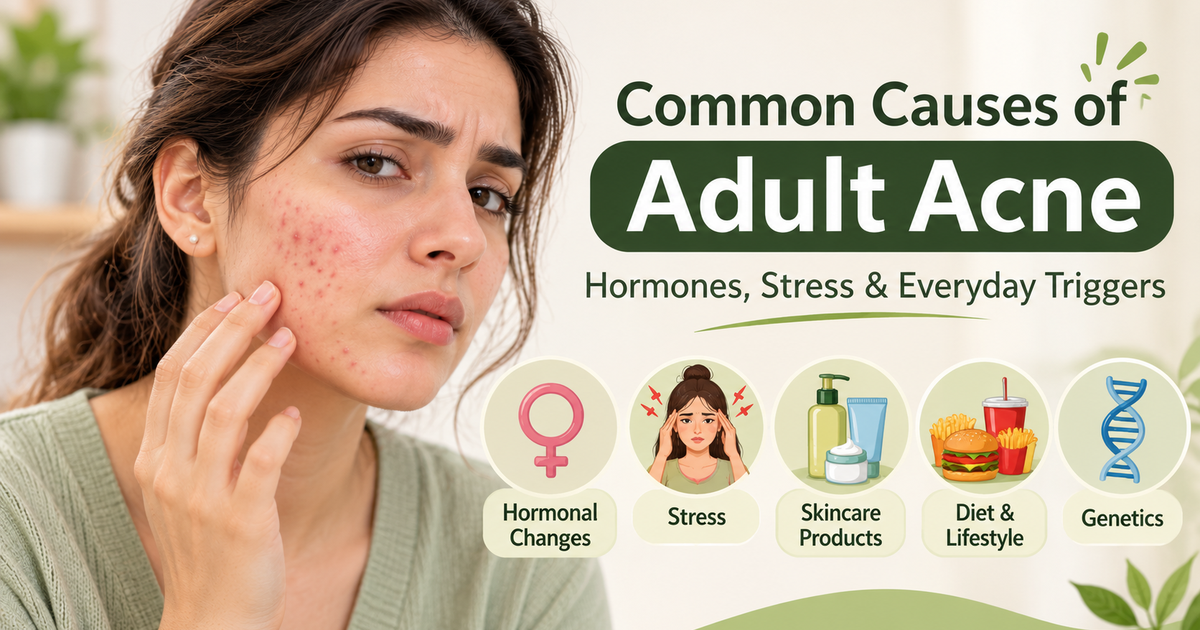
Acne is not just a teenage skin concern. Many adults continue to experience breakouts after adolescence, while others develop pimples for the first time in their 20s, 30s, or 40s. These breakouts may appear on the face, particularly around the chin, jawline, cheeks, and forehead.
The causes of adult acne vary from person to person. Hormonal fluctuations, stress, genetics, certain medications, and unsuitable skincare products can all contribute to clogged pores and inflammation. Everyday habits and dietary patterns may also make existing breakouts worse.
Understanding why breakouts occur is an important first step toward identifying possible triggers and making informed skincare choices. In this guide, we explore common causes, everyday factors that may worsen breakouts, and when to seek professional advice.
What Is Adult Acne?
Adult acne refers to pimples and other forms of acne that develop or continue after the teenage years. It commonly affects people aged 25 and older. Some adults experience persistent acne that began during adolescence, while others develop breakouts for the first time later in life.
Acne develops when hair follicles become clogged with excess sebum (natural skin oil) and dead skin cells. This blockage can lead to inflammation and different types of pimples. Cutibacterium acnes, a bacterium naturally found on the skin, can also contribute to the inflammatory process.
Breakouts commonly appear on the face, particularly around the chin, jawline, cheeks, and forehead. However, acne can also affect the chest, shoulders, and back.
Common types of acne include:
- Whiteheads: Small, closed bumps that form when pores become blocked by oil and dead skin cells.
- Blackheads: Small, dark spots that develop when blocked pores remain open and their contents react with air.
- Papules: Small, red, inflamed bumps that may feel tender.
- Pustules: Inflamed bumps containing pus, often with a white or yellow centre.
- Cysts: Deep, painful lumps beneath the skin that can increase the risk of scarring.
Recognising the type of acne you experience can help you understand your skin concerns. However, the appearance of breakouts alone cannot identify their exact cause.
What Are the Common Causes of Adult Acne?
Several factors can contribute to breakouts during adulthood. Hormonal fluctuations, stress, genetics, skincare products, diet, and certain medications may affect oil production, clog pores, or increase skin inflammation.
For some people, one factor may contribute to recurring breakouts. Others may experience acne due to a combination of causes. Understanding these factors can help you recognize possible triggers and make more informed decisions about your skincare.
Hormonal Changes
Hormonal fluctuations are among the common factors associated with breakouts in adults. Androgens, a group of hormones found in all adults, can stimulate the skin’s oil glands to produce more sebum. When excess oil combines with dead skin cells, it can clog pores and contribute to inflammation.
Hormone levels can change at different stages of life and may influence the skin in several ways:
- Menstrual cycles: Hormone levels fluctuate throughout the menstrual cycle, which may lead to recurring breakouts, particularly before a period.
- Pregnancy: Changes in hormone levels during pregnancy can affect oil production and may cause new or existing acne to worsen.
- Perimenopause and menopause: Hormonal changes during these stages can contribute to breakouts, even in people who rarely experienced acne earlier in life.
- Starting or stopping birth control: Changes in hormonal contraception may affect the skin and trigger breakouts in some individuals.
Hormonal breakouts often appear around the chin, jawline, and lower cheeks, although they can develop in other areas of the face and body.
The American Academy of Dermatology (AAD) explains how hormonal changes can contribute to acne in adults, including recurring breakouts around the menstrual cycle.
Stress and Its Effect on Skin Breakouts
Stress may worsen existing acne and contribute to recurring breakouts. During stressful periods, the body releases hormones and other chemical signals that can influence oil production and inflammation in the skin.
Stress can also affect everyday habits. Poor sleep, changes in eating patterns, and frequently touching or picking the face may further aggravate existing breakouts.
Although stress is not the only cause of acne, managing it through adequate sleep, regular physical activity, and relaxation may support overall well-being and skin health.
Genetics and Family History
Genetics can influence a person’s likelihood of developing acne. People whose parents experienced frequent breakouts may have a higher chance of experiencing similar skin concerns.
Inherited factors can affect how much oil the skin produces, how easily pores become clogged, and how the skin responds to inflammation. This may explain why some adults are more prone to persistent breakouts than others, even when they follow similar skincare routines.
However, having a family history of acne does not mean someone will definitely develop it. Genetics can increase susceptibility, but other factors, such as hormones, skincare habits, and medications, may also contribute.
Skincare and Cosmetic Products
Some skincare, makeup, and hair care products may contribute to clogged pores and breakouts, particularly when they are not suitable for your skin type. Products containing heavy oils or ingredients that leave a thick residue may worsen acne in some individuals.
Common product-related triggers include:
- Heavy moisturizers: Thick creams and oil-based products may contribute to clogged pores in acne-prone skin.
- Makeup products: Certain foundations, concealers, and cosmetics may trigger breakouts if they are not suitable for your skin.
- Hair care products: Oils, conditioners, gels, and styling creams can transfer to the forehead, temples, and cheeks, sometimes causing small bumps around the hairline.
- Harsh skincare products: Strong cleansers and excessive exfoliation can irritate the skin and damage its protective barrier.
- Makeup residue: Not removing makeup before sleeping may leave product buildup on the skin and contribute to clogged pores.
Frequently changing products or combining several active ingredients can also irritate the skin, making it harder to identify the source of a reaction.
When choosing skincare and makeup, look for products labelled non-comedogenic, meaning they are formulated to reduce the likelihood of clogging pores. However, individual skin reactions can vary, even with these products.
Diet and Eating Habits
What you eat may also play a role in skin health. Although diet is not the main cause of acne for everyone, some foods may make breakouts worse in people who are prone to them.
Research has suggested possible links between certain eating habits and acne. Here are a few dietary factors worth understanding:
- High-glycemic foods: White bread, sugary cereals, sweets, pastries, and soft drinks can raise blood sugar levels quickly. This may affect hormone activity and oil production, potentially worsening breakouts.
- Dairy products: Some studies have found a possible link between cow’s milk and acne, particularly skim milk. However, more research is needed, and dairy does not affect everyone’s skin in the same way.
- Highly processed foods: Regularly eating foods high in refined carbohydrates and added sugars may be associated with a greater likelihood of breakouts.
It is important to remember that no single food causes acne in everyone. You may notice that certain foods seem to trigger your breakouts, while someone else may eat the same foods without experiencing any skin changes.
Pay attention to your eating habits and notice whether particular foods are consistently followed by breakouts. However, avoid removing entire food groups from your diet without a clear reason or advice from a healthcare professional.
Medications and Underlying Health Conditions
Sometimes, breakouts are linked to medications or underlying health conditions rather than skincare habits alone. Changes in hormone levels and certain prescription medicines can affect oil production and contribute to acne-like eruptions.
Medications That May Trigger Breakouts
Some medicines may cause or worsen acne-like skin eruptions. These include:
- Corticosteroids: Certain steroid medicines may cause acne-like bumps, particularly with prolonged use.
- Testosterone therapy: Testosterone can increase oil production, which may contribute to clogged pores and breakouts.
- Hormonal medications: Starting, stopping, or changing hormonal medicines may affect the skin in some individuals.
- Lithium: This prescription medicine may cause acne-like eruptions in some people.
Not everyone who takes these medicines will develop acne. If you notice new breakouts after starting a prescription, discuss the possible connection with your healthcare professional. Never stop or change prescribed medication without medical advice.
Hormonal Conditions Such as PCOS
Polycystic ovary syndrome (PCOS) is a hormonal condition that can affect people of reproductive age. It may involve higher androgen levels, which can increase oil production and contribute to persistent acne.
Other possible symptoms include:
- Irregular or missed menstrual periods.
- Increased facial or body hair growth.
- Thinning hair on the scalp.
- Difficulty managing weight.
Some people with PCOS experience breakouts around the chin and jawline, but acne alone does not mean someone has this condition.
If recurring breakouts occur alongside irregular periods or other hormonal symptoms, speak with a healthcare professional. You can also learn more about polycystic ovary syndrome from the NHS.
Everyday Factors That Trigger Facial Breakouts
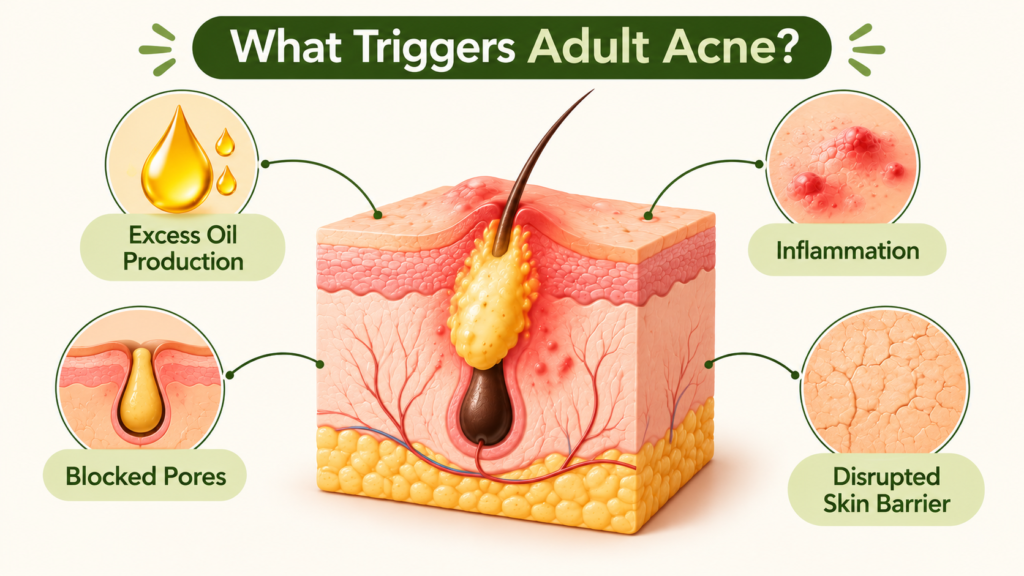
Apart from hormonal changes, genetics, and other underlying causes, everyday habits and environmental conditions may also affect your skin. These factors do not always cause acne directly, but they can irritate the skin or make existing breakouts worse.
Here are some common triggers to watch for:
Frequent Touching of the Face
Touching your face throughout the day can transfer oil, dirt, and other substances from your hands to your skin. Picking, squeezing, or scratching pimples can increase inflammation and raise the risk of scarring or dark marks.
Sweat and Friction
Sweating during exercise or in hot weather is normal. However, sweat combined with friction from tight clothing, helmets, headbands, or face masks can irritate the skin and contribute to breakouts. This is sometimes known as acne mechanica.
Pillowcases and Towels
Pillowcases and towels can collect sweat, oil, dead skin cells, and product residue. Although unclean fabrics are not a direct cause of acne, washing them regularly helps keep items that touch your face clean.
Hair and Styling Products
Hair oils, conditioners, gels, and styling creams can transfer to your forehead, temples, and the sides of your face. Some products may clog pores and cause small bumps, especially around the hairline.
Environmental Factors
Heat, humidity, pollution, and exposure to certain workplace substances may affect the skin. Hot and humid conditions, for example, can increase sweating and make existing skin concerns more noticeable.
Paying attention to these everyday factors can help you identify patterns in your breakouts. Small changes to daily habits may reduce irritation, although they cannot address every underlying cause.
Why Does Acne Occur in Your 20s and 40s?
Acne can appear at different stages of adulthood, even in people who rarely experienced breakouts as teenagers. Hormonal changes, lifestyle habits, and changes in skin condition may all play a role. However, the factors behind breakouts can differ depending on age.
Breakouts During Your 20s
Many people continue to experience pimples in their 20s, while others develop acne for the first time during this stage. Hormonal fluctuations are a common contributing factor, particularly when breakouts occur around the menstrual cycle.
Other possible influences include:
- Hormonal changes: Fluctuations in hormone levels can increase oil production and contribute to clogged pores.
- Stress and lifestyle: Work pressure, poor sleep, and changes in daily routines may worsen existing breakouts.
- Skincare habits: Heavy cosmetics or products that irritate the skin may contribute to clogged pores.
- Dietary patterns: Some people notice that high-glycemic foods or certain dairy products are associated with their breakouts.
Breakouts During Your 40s
Developing acne in your 40s can be surprising, especially if you have rarely experienced skin problems before. One possible reason is perimenopause, the stage when hormone levels begin to fluctuate before menopause.
Changes in estrogen and androgen levels can influence oil production and contribute to breakouts. Other factors, such as stress, medications, and changes in skincare habits, may also play a role.
Breakouts may appear around the chin, jawline, and lower face, although their location can vary from person to person.
What is the difference? Breakouts in your 20s may be associated with ongoing hormonal fluctuations and lifestyle factors, while acne in your 40s may be linked to hormonal changes during perimenopause. However, age and breakout location alone cannot determine the exact cause.
How Can You Reduce Factors That Trigger Breakouts?
Not all causes of acne can be controlled. Genetics and hormonal changes, for example, are not always within your control. However, a few simple changes to your daily routine may help reduce irritation and prevent some breakouts from getting worse.
Here are some practical habits to consider:
Choose Suitable Skincare Products
Choose products that suit your skin type. If you are prone to breakouts, look for products labelled non-comedogenic, which are formulated to reduce pore blockage. Avoid products that leave your skin feeling excessively oily or irritated.
Follow a Gentle Skincare Routine
Wash your face gently twice a day and after sweating. Avoid harsh scrubbing, frequent exfoliation, or washing too often, as these habits can irritate your skin.
Pay Attention to Your Diet
Notice whether certain foods are consistently associated with changes in your skin. A balanced diet containing fruits, vegetables, whole grains, and other nutritious foods supports overall health. Avoid eliminating entire food groups without a clear reason or professional advice.
Manage Everyday Stress
Ongoing stress may worsen existing breakouts. Getting enough sleep, staying physically active, and making time for relaxation can support your overall well-being.
Avoid Picking or Squeezing Pimples
Picking at pimples can increase inflammation and raise the risk of scars and dark marks. Let blemishes heal without squeezing or scratching them.
Keep Items That Touch Your Face Clean
Wash pillowcases, towels, and makeup brushes regularly. Clean phone screens and other frequently touched items to reduce the buildup of oil, dirt, and product residue.
These habits may help reduce certain triggers, but they cannot address every underlying cause. If breakouts continue, become painful, or leave scars, seek professional advice about suitable treatment options.
When Should You See a Dermatologist?
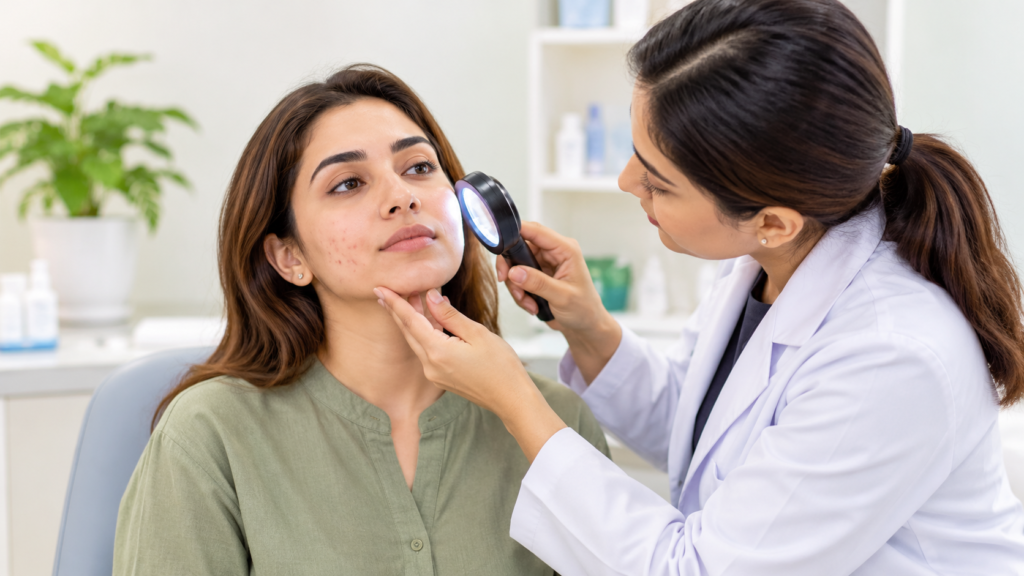
Occasional breakouts may improve with a consistent skincare routine, but persistent or severe acne may need professional attention. Consider consulting a dermatologist if you notice any of the following:
- Breakouts that do not improve: Acne that continues for several months despite gentle skincare may require professional assessment.
- Painful or deep pimples: Large, tender bumps or cysts can increase the risk of permanent scarring.
- Dark marks or scars: If breakouts leave lasting marks or scars, early treatment may help prevent further skin damage.
- Sudden or severe acne: A sudden increase in breakouts may sometimes be associated with hormonal changes, medication, or an underlying health condition.
- Emotional distress: Acne can affect confidence and emotional well-being. If your skin concerns are causing stress or affecting daily life, seeking help is worthwhile.
A dermatologist can examine your skin, assess possible contributing factors, and recommend appropriate treatment. If breakouts occur alongside irregular periods, increased facial hair, or other hormonal symptoms, discuss these changes with a healthcare professional.
Getting professional advice can help you understand what may be contributing to your breakouts and choose an appropriate way to manage them.
Frequently Asked Questions About Adult Acne
What are the most common causes of adult acne?
Hormonal changes, stress, genetics, certain medications, and unsuitable skincare products are common factors associated with breakouts in adults. Diet and lifestyle habits may also contribute in some individuals.
Why am I getting acne in my 30s or 40s?
Hormonal fluctuations, stress, medications, and changes in skincare habits may contribute to breakouts during adulthood. In your 40s, hormonal changes associated with perimenopause may also play a role.
Can stress cause facial breakouts?
Stress may worsen existing acne by influencing oil production and inflammation. It can also affect sleep and daily habits, which may further aggravate skin concerns.
Can certain foods trigger acne?
Some research suggests that high-glycemic foods and cow’s milk may worsen breakouts in certain individuals. However, food triggers vary, and not everyone experiences acne because of their diet.
When should I seek professional help for acne?
Consider consulting a dermatologist if your acne is persistent, painful, severe, or leaving scars. A healthcare professional can assess your skin, investigate possible contributing factors, and recommend appropriate treatment.
Understanding Your Skin Concerns with Bless Homeopathy
Recurring breakouts can be frustrating, especially when you are unsure what is causing them. Hormonal changes, skincare habits, and other individual factors may all contribute to skin concerns. Understanding your skin’s needs can help you make more informed decisions about care.
At Bless Homeopathy, you can explore personalized skin care services based on your individual concerns. If you are experiencing recurring breakouts or looking for guidance about your skin, visit the Bless Homeopathy skin care page to learn more about the available services.
For persistent, painful, or severe acne, it is also important to consult a qualified dermatologist who can assess possible causes and discuss evidence-based treatment options.
Conclusion
Adult acne can develop for several reasons, including hormonal changes, stress, genetics, skincare products, certain medications, and individual lifestyle factors. These triggers can affect people differently, which is why the cause of recurring breakouts is not always easy to identify.
Paying attention to your skin, noticing possible triggers, and following a gentle skincare routine can help you make more informed choices. However, persistent, painful, or severe acne should not be ignored.
If your breakouts continue or leave scars, consult a qualified dermatologist to understand the possible causes and discuss suitable treatment options. Taking the right steps can help you manage your skin concerns with greater confidence.