
Have you ever felt overwhelmed by a busy day, an important deadline, or a difficult situation? Stress is a common part of life. But sometimes, even when everything seems fine, you may continue to feel worried, restless, or uneasy. This can make it difficult to understand what you are experiencing.
Understanding anxiety vs stress can help you recognize your feelings and respond to them in a healthier way. Although both can affect your mind and body, they are not exactly the same. Stress is often linked to a specific challenge, while anxiety may continue even when there is no immediate problem.
Both can affect your sleep, concentration, mood, and daily activities. Learning about their causes, symptoms, and differences can help you recognize when you may need extra support.
What Is Stress?
Stress is your body’s natural response to pressure, demands, or challenging situations. It can happen when you feel that something requires more time, energy, or effort than you can manage.
For example, preparing for an exam, completing a work project, dealing with financial problems, or managing family responsibilities can cause stress. Your body may respond by becoming more alert, helping you focus and deal with the situation.
Stress is not always harmful. Short-term stress can sometimes motivate you to complete tasks, make decisions, or respond to challenges. However, when pressure continues for a long time without enough rest or support, it can become difficult to manage.
Common Causes of Stress
Stress can develop from different situations in everyday life. Some common causes include:
- Work pressure and demanding deadlines
- Financial difficulties and unexpected expenses
- Exams, academic responsibilities, and fear of failure
- Relationship problems or family conflicts
- Major life changes, such as moving or starting a new job
- Health concerns affecting you or someone close to you
- Lack of sleep and poor work-life balance
- Feeling unsupported or having too many responsibilities
The same situation may cause stress for one person but feel manageable to another. Your personal experiences, resources, health, and ability to cope can influence how you respond.
Top 10 Causes of Stress at Work
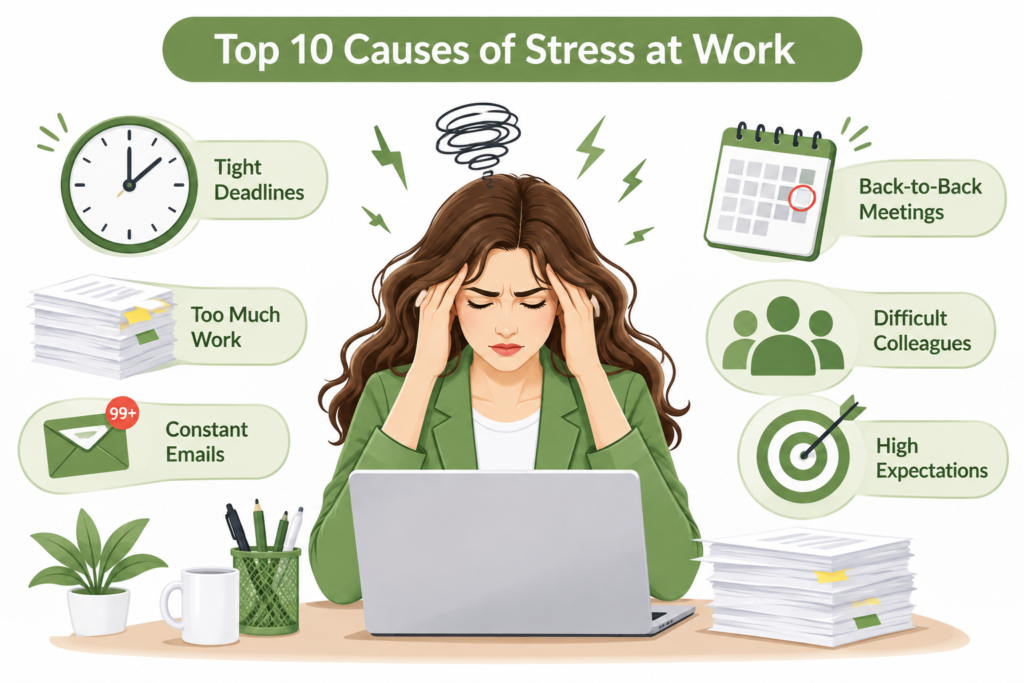
Workplace pressure is a common source of stress, particularly when people feel they have little control over their responsibilities or do not have enough support.
The top 10 causes of stress at work include:
- Heavy workload: Too many tasks can make it difficult to complete everything on time.
- Unrealistic deadlines: Constant pressure to finish work quickly can leave little time for rest.
- Poor communication: Unclear instructions or a lack of communication can create confusion.
- Unclear job expectations: Employees may feel stressed when they do not know what is expected of them.
- Job insecurity: Fear of losing employment or uncertainty about the future can affect emotional well-being.
- Workplace conflict: Disagreements with managers or coworkers can make the workplace uncomfortable.
- Long working hours: Spending too much time working can affect sleep, family life, and personal activities.
- Lack of recognition: Feeling that your efforts are not appreciated may reduce motivation.
- Insufficient resources: Not having the tools, training, or support needed to complete tasks can increase pressure.
- Performance pressure: Constantly trying to meet targets or avoid mistakes can create ongoing tension.
When these challenges continue, they may contribute to chronic stress, making it harder to relax even after work ends.
What Is Anxiety?
Anxiety is a feeling of worry, fear, nervousness, or uneasiness about something that may happen. It is a natural response to uncertainty or a perceived threat.
For example, you may feel anxious before a job interview, a medical appointment, or an important conversation. These feelings can be normal and may help you prepare for the situation.
However, anxiety can sometimes continue even after the situation has passed. A person may repeatedly imagine negative outcomes, worry about the future, or feel afraid without knowing exactly why.
Unlike stress, anxiety does not always have a clear external cause. It may involve thoughts about possible dangers or problems that have not happened.
Common Causes and Triggers of Anxiety
Anxiety can be influenced by different factors, including:
- Uncertainty about the future
- Fear of failure or making mistakes
- Health-related concerns
- Social situations or fear of judgment
- Past difficult or traumatic experiences
- Ongoing stress at work or home
- Major life changes
- Family history and individual differences
Sometimes, people experience anxiety without being able to identify a specific trigger. This does not mean their feelings are imaginary or unimportant.
When Anxiety Becomes an Anxiety Disorder
Feeling anxious from time to time does not necessarily mean you have an anxiety disorder. Normal anxiety usually comes and goes, depending on the situation.
An anxiety disorder involves anxiety or fear that is more intense, persistent, or difficult to control than expected. It may interfere with daily life, relationships, work, education, or other activities.
There are different types of anxiety disorders, including generalized anxiety disorder, panic disorder, social anxiety disorder, and specific phobias. Each can involve different symptoms and experiences.
A mental health professional can assess your symptoms and determine whether they are related to an anxiety disorder or another concern. Self-diagnosis based on a few symptoms is not enough.
There are different types of anxiety disorders, including generalized anxiety disorder, panic disorder, social anxiety disorder, and specific phobias. Read more about different types of anxiety disorders.
Anxiety vs. Stress: What Is the Difference?
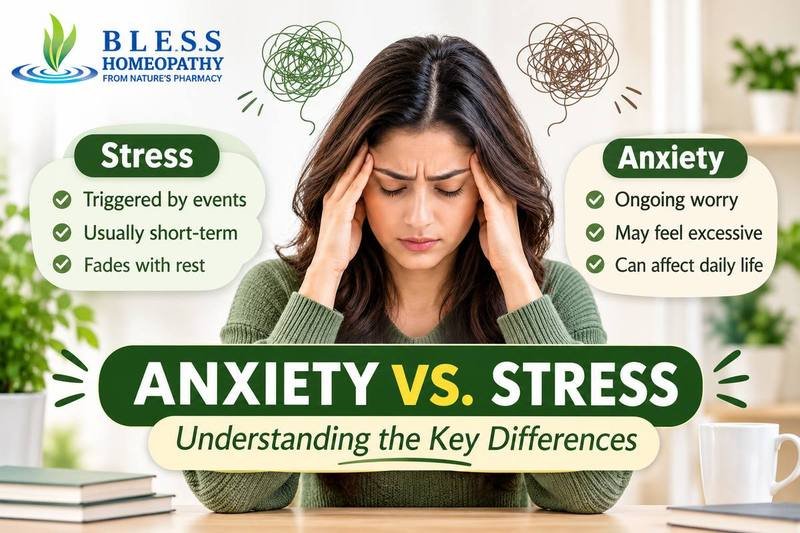
The main difference between anxiety vs stress is often the reason behind the feelings and how long they last.
Stress is usually a response to an identifiable challenge or pressure. Anxiety is often related to worry, fear, or uncertainty and may continue even when the original stressor is no longer present.
| Factor | Stress | Anxiety |
| Main cause | Pressure or a challenging situation | Worry, fear, or perceived threat |
| Trigger | Often linked to a specific event | May have an obvious trigger or no clear trigger |
| Duration | Often eases when the problem is resolved | May continue after the situation has passed |
| Thoughts | Focus on dealing with a current problem | Often focused on possible future problems |
| Emotions | Frustration, pressure, overwhelm | Fear, dread, nervousness, uneasiness |
| Physical symptoms | Muscle tension, headaches, fatigue | Racing heart, restlessness, sweating |
| Behavior | Difficulty managing tasks or responsibilities | Avoidance, repeated checking, or reassurance-seeking |
| Impact | Can be short-term or ongoing | May become persistent and affect daily functioning |
These differences are general patterns. Stress and anxiety can overlap, and a person may experience both at the same time.
Stress Is Often Linked to a Specific Situation
Stress usually develops when you feel under pressure or need to deal with a challenge.
For example, if you have several assignments due in one week, you may feel overwhelmed, have difficulty sleeping, or become irritable. Once you finish the assignments, these feelings may begin to ease.
The source of stress may be clear, even if the situation feels difficult to manage.
Anxiety Can Continue After the Situation Has Passed
Anxiety may continue even when the original problem is resolved.
For example, after completing a job interview, you may keep thinking about what you said, worry that you made a mistake, or fear that you will not get the job. Even without new information, your mind may continue imagining negative outcomes.
This is one of the important differences when understanding anxiety vs stress.
Symptoms of Stress
Stress can affect your physical health, emotions, thoughts, and behavior. Symptoms may vary from person to person, depending on the situation and how long the stress lasts.
Physical Symptoms of Stress
Common physical symptoms include:
- Headaches
- Muscle tension or body aches
- Fatigue
- Faster heartbeat
- Stomach discomfort
- Changes in appetite
- Difficulty sleeping
- Sweating
These symptoms can occur because the body becomes more alert when responding to pressure.
Emotional and Mental Symptoms of Stress
Stress may also affect how you think and feel. You may experience:
- Irritability or frustration
- Feeling overwhelmed
- Difficulty concentrating
- Racing thoughts
- Mood changes
- Feeling unable to cope
- Reduced motivation
Behavioral Symptoms of Stress
Some people notice changes in their behavior, such as:
- Procrastinating or avoiding tasks
- Eating more or less than usual
- Withdrawing from friends and family
- Becoming less productive
- Losing interest in activities
- Relying more on unhealthy coping habits
When these symptoms become frequent, it may be a sign that you need more time to rest, additional support, or help managing your responsibilities.
Symptoms of Anxiety
Anxiety can cause many of the same symptoms as stress. However, it may involve ongoing worry, fear, or a sense that something bad could happen.
Physical Symptoms of Anxiety
Common symptoms may include:
- Racing or pounding heartbeat
- Sweating
- Trembling or shaking
- Shortness of breath
- Muscle tension
- Dizziness
- Stomach discomfort
- Restlessness
- Difficulty sleeping
Not everyone experiences all these symptoms, and their intensity can vary.
Emotional and Mental Symptoms of Anxiety
People experiencing anxiety may notice:
- Constant or excessive worry
- Fear of uncertain situations
- Feeling nervous or on edge
- Difficulty controlling anxious thoughts
- Fear of making mistakes
- Trouble concentrating
- A sense of dread
Behavioral Symptoms of Anxiety
Anxiety may affect behavior in different ways, including:
- Avoiding situations that cause fear
- Repeatedly checking things
- Asking others for reassurance
- Overthinking everyday decisions
- Avoiding social activities
- Finding it difficult to complete daily tasks
When anxiety becomes difficult to control and affects everyday life, a professional assessment may help determine whether an anxiety disorder is present.
Anxiety vs. Stress: Real-Life Examples
Understanding anxiety vs stress becomes easier when you look at everyday situations.
Work and Deadlines
Stress: You feel pressured because your manager has given you several tasks with a short deadline. You feel tense and overwhelmed until you complete the work.
Anxiety: Even after completing your tasks, you continue worrying that your manager will criticize you, that you made a mistake, or that you may lose your job.
Exams and Education
Stress: You feel pressure because you have an exam tomorrow and still need to revise several topics.
Anxiety: You repeatedly imagine failing, worry about disappointing your family, or feel unable to concentrate because of fear, even after preparing.
Health Concerns
Stress: Receiving unexpected health news may leave you feeling overwhelmed while you try to understand your options.
Anxiety: You may continue worrying about having a serious illness, even after receiving reassuring information, or become highly concerned about minor physical sensations.
Relationships
Stress: An argument with a friend or family member makes you upset and emotionally exhausted.
Anxiety: You repeatedly worry that someone will reject you, stop caring about you, or misunderstand you, even when there is no clear sign of a problem.
Can Stress Cause Anxiety?
Yes, ongoing stress may contribute to anxiety. When someone faces repeated pressure, uncertainty, or difficult situations, they may begin to worry about what could happen next.
For example, financial problems may initially cause stress because of unpaid bills. Over time, a person may start worrying constantly about losing their home, being unable to support their family, or facing future financial problems.
Chronic stress can make it harder for the mind and body to relax. It may also affect sleep, concentration, mood, and emotional well-being. These changes can contribute to feelings of anxiety.
However, chronic stress does not automatically lead to an anxiety disorder. People respond to stress differently, and several factors can influence mental health, including personal experiences, social support, health, and coping skills.
Stress and anxiety may also occur together. Someone can be dealing with a difficult situation while also experiencing persistent worry about the future.
How Stress and Anxiety Affect Your Body
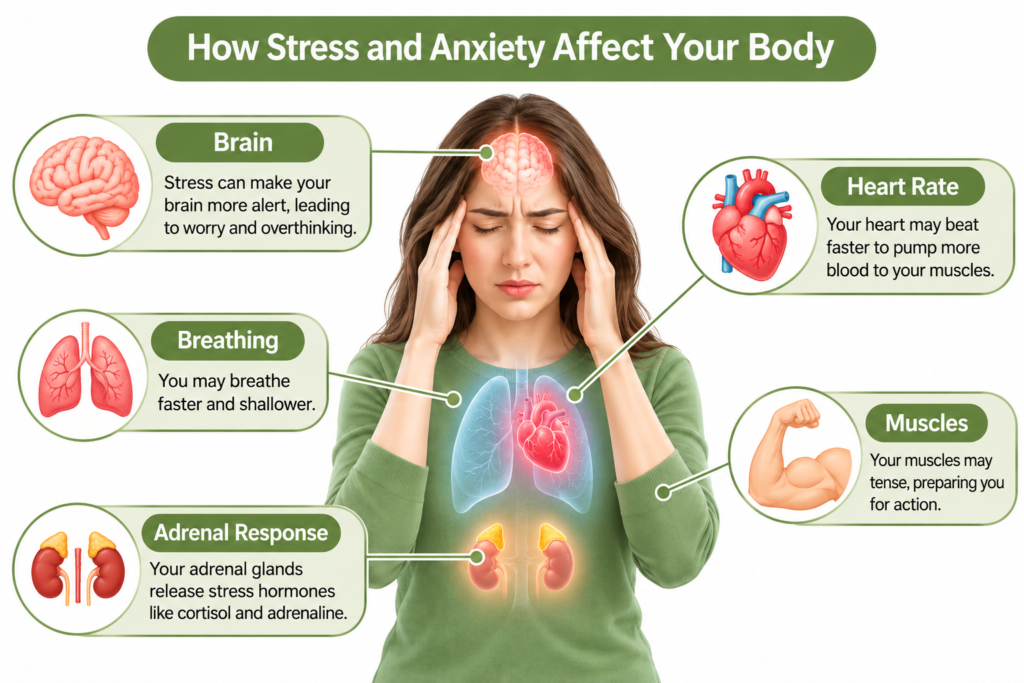
Both stress and anxiety activate the body’s natural response to perceived danger. This response is often called the fight-or-flight response.
When your body senses a threat, it prepares you to respond. Your heart rate may increase, breathing may become faster, muscles may tighten, and you may become more alert.
These reactions can be helpful during short-term challenges. However, repeated activation may become uncomfortable and affect your well-being.
Effects of Chronic Stress
Chronic stress occurs when pressure or stressful feelings continue for a prolonged period. It may leave you feeling exhausted, overwhelmed, or unable to relax.
Possible effects of chronic stress include:
- Ongoing sleep problems
- Frequent headaches or muscle tension
- Irritability and mood changes
- Difficulty concentrating
- Digestive discomfort
- Reduced energy
- Feeling emotionally exhausted
Long-term stress can affect health, so it is important to recognize symptoms and take steps to manage them. Learn more about the effects of stress on your health.
How to Manage Stress and Anxiety
Although stress and anxiety can feel overwhelming, small changes in daily habits may help you cope better. The best approach depends on what is causing your symptoms and how severe they are.
Identify Your Triggers
Try to notice when you begin feeling stressed or anxious. Is it related to work, finances, relationships, health concerns, or a particular situation?
Writing down your thoughts and feelings may help you recognize patterns and understand what is affecting you.
Practice Relaxation and Breathing Exercises
Slow breathing, mindfulness, and relaxation exercises may help you feel calmer when your body is tense.
Try taking slow, comfortable breaths and gently focusing your attention on the present moment rather than worrying about what may happen next.
Stay Physically Active
Regular movement, such as walking, stretching, cycling, or other activities you enjoy, may support emotional well-being.
You do not need an intense workout. Even a short walk can provide a break from stressful thoughts and daily responsibilities.
Maintain a Healthy Sleep Routine
Sleep is important for emotional and physical health. Try to maintain regular sleep and wake times, reduce screen use before bed, and create a comfortable sleeping environment.
Poor sleep can make it more difficult to manage stress and anxiety the following day.
Break Tasks Into Smaller Steps
When responsibilities feel overwhelming, divide them into smaller, manageable tasks.
Instead of trying to complete everything at once, choose one task, focus on it, and take breaks when needed. This may help reduce pressure and make daily responsibilities feel more manageable.
Talk to Someone You Trust
Sharing your concerns with a trusted friend, family member, or supportive person can help you feel less alone.
You do not always need someone to solve your problems. Sometimes, having someone listen without judgment can make difficult feelings easier to manage.
Seek Professional Support
If stress or anxiety continues despite your efforts, or if it begins affecting your sleep, relationships, work, or daily activities, consider speaking with a qualified healthcare professional or mental health specialist.
Professional support can help you understand the causes of your symptoms and explore suitable ways to manage them. Depending on your needs, treatment may include psychotherapy, medication, or other approaches recommended by a qualified clinician.
At Bless Homeopathy, readers can also explore the clinic’s Stress & Anxiety services to learn about the care it offers. Complementary care should not replace evidence-based mental health assessment or treatment.
When Should You Seek Professional Help?
Occasional stress and anxiety are normal. However, you should consider seeking help when your feelings become persistent, overwhelming, or difficult to control.
Pay attention if:
- You feel worried or tense most of the time.
- Your symptoms interfere with your daily routine.
- You regularly struggle to sleep.
- You avoid activities because of fear or worry.
- You experience repeated panic-like episodes.
- You find it difficult to manage work, studies, or relationships.
- You feel emotionally exhausted or unable to cope.
A professional can help assess your symptoms and determine whether they are related to stress, an anxiety disorder, another mental health concern, or a physical health condition.
If you experience severe chest pain, serious breathing difficulty, fainting, or other urgent physical symptoms, seek immediate medical attention rather than assuming they are caused by anxiety.
Frequently Asked Questions
Is stress the same as anxiety?
No. Stress is usually a response to an external pressure or challenge, while anxiety often involves ongoing worry or fear about possible problems. The two can share symptoms and occur together.
What is the main difference between anxiety vs stress?
The main difference is often the trigger and duration. Stress is usually linked to a specific situation, while anxiety may continue after the situation has passed or occur without a clear trigger.
Can stress turn into an anxiety disorder?
Ongoing stress may contribute to anxiety, but it does not mean everyone who experiences stress will develop an anxiety disorder. If worry becomes persistent, difficult to control, and affects daily life, a mental health professional can assess it.
Can anxiety happen without a reason?
Yes. Sometimes people feel anxious without identifying a clear cause. Anxiety may be influenced by several factors, including past experiences, uncertainty, health, and biological or psychological factors.
What are the physical symptoms of stress and anxiety?
Both may cause headaches, muscle tension, fatigue, sleep problems, digestive discomfort, sweating, and changes in heart rate. Symptoms vary from person to person.
How do I know if I’m stressed or anxious?
Consider whether your feelings are linked to a specific situation and whether they ease when it is resolved. Persistent worry, fear, or symptoms that continue without an obvious trigger may suggest anxiety. These patterns are not a diagnosis.
Can chronic stress affect mental health?
Yes. Chronic stress may affect sleep, mood, concentration, and overall well-being. If it continues for a long time or becomes difficult to manage, consider talking to a healthcare professional.
When should I seek help for an anxiety disorder?
Consider professional help when anxiety is persistent, difficult to manage, or affecting your work, relationships, sleep, or everyday activities. A qualified mental health professional can help determine whether you may have an anxiety disorder and discuss suitable treatment options.
Conclusion
Understanding anxiety vs stress can help you recognize what you are feeling and take steps to care for your emotional well-being. Stress is often linked to a specific challenge, while anxiety may continue even when there is no immediate threat.
Both can affect your thoughts, emotions, physical health, and daily routine. Occasional feelings are a normal part of life, but persistent symptoms should not be ignored.
If you are dealing with chronic stress or ongoing anxiety, give yourself time to rest, identify what may be contributing to your feelings, and seek support when needed. Taking care of your mental health is an important part of taking care of your overall health.