
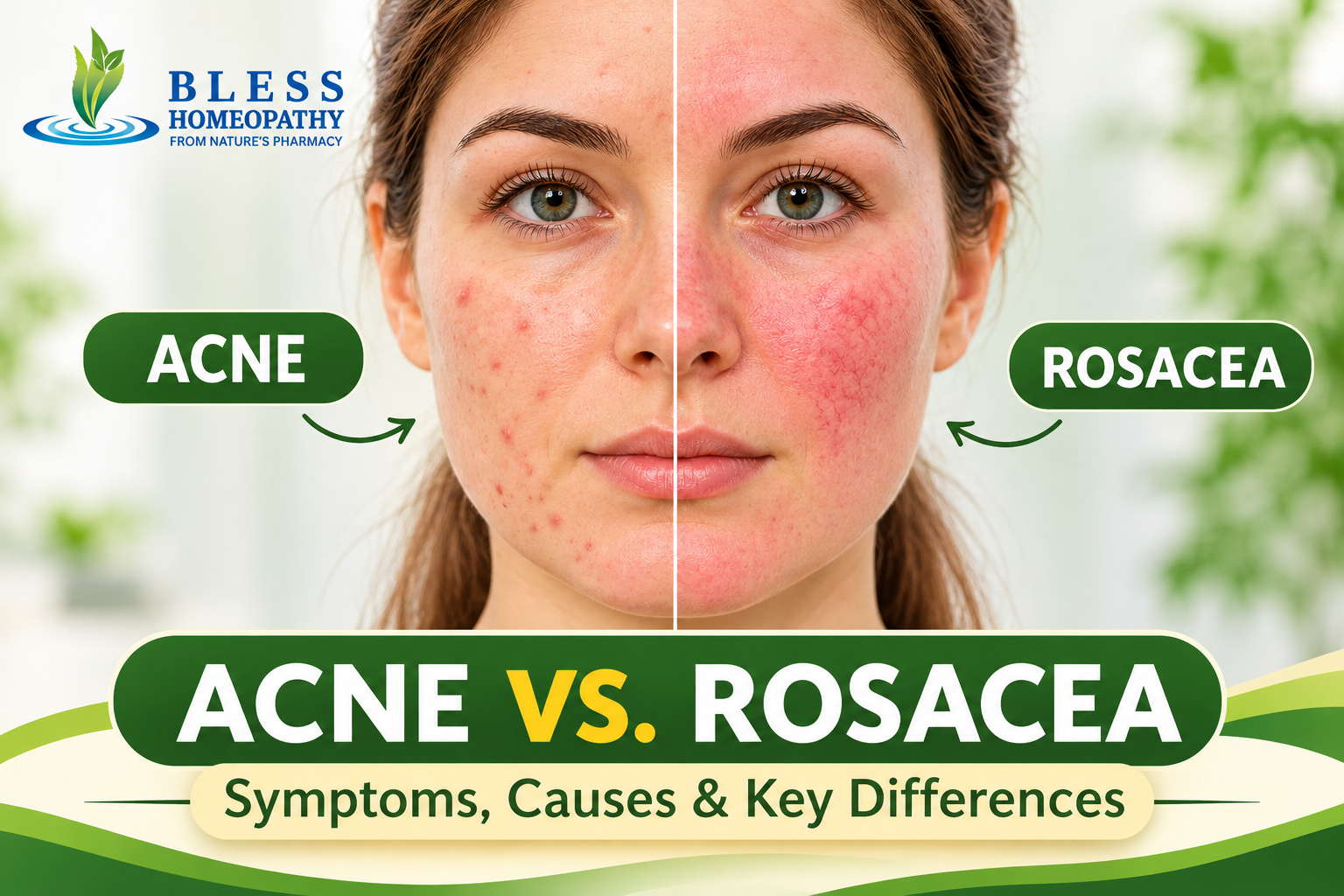
Have you noticed persistent redness, small bumps, or recurring breakouts on your face? These skin changes may look like acne, but they could also be signs of rosacea. Since both conditions can cause pimples and inflammation, it is easy to confuse them.
However, acne and rosacea are two different skin conditions. They have different causes, symptoms, triggers, and treatment approaches. Understanding the difference can help you recognize what may be happening to your skin and avoid using products that could make the problem worse.
In this guide, we will explore acne vs rosacea, their common symptoms, possible causes, and the key differences that can help you understand these conditions.
What Is Acne?
Acne is a common skin condition that develops when hair follicles become clogged with oil (sebum) and dead skin cells. This buildup can create different types of blemishes, including blackheads, whiteheads, and inflamed pimples.
Acne commonly appears on the face, chest, shoulders, and back because these areas contain many oil-producing glands. Although it is more common during adolescence, adults can also experience breakouts.
For more medical information, read this guide to acne vulgaris from Stanford Medicine.
Several factors can contribute to acne, including hormonal changes, excess oil production, genetics, and inflammation. In some cases, acne can become more severe and develop into painful bumps beneath the skin.
Common types of acne include:
- Blackheads: Small, dark spots that develop when clogged pores remain open.
- Whiteheads: Small bumps that form when clogged pores remain closed.
- Papules: Small, red, inflamed bumps that may feel tender.
- Pustules: Inflamed pimples containing pus.
- Nodules: Large, deep, and painful lumps beneath the skin.
- Cysts: Deep, pus-filled lesions that may cause scarring.
Acne can range from mild to severe. Without appropriate care, deeper breakouts may leave dark marks or permanent scars.
What Is Rosacea?
Rosacea is a chronic inflammatory skin condition that mainly affects the central part of the face. It commonly causes persistent redness, frequent flushing, visible blood vessels, and small bumps that may look like acne.
Unlike ordinary acne, rosacea does not usually develop because pores become clogged with oil and dead skin cells. Its exact cause is not fully understood, but inflammation, changes in facial blood vessel activity, genetics, and environmental factors may contribute to the condition.
Rosacea often affects the cheeks, nose, chin, and forehead. Its symptoms may become more noticeable after exposure to certain triggers, such as sunlight, heat, spicy foods, or emotional stress.
Rosacea can appear in several different ways:
- Persistent facial redness: The cheeks, nose, and other central areas of the face may remain red or discolored.
- Flushing: The face may suddenly become warm and change color.
- Acne-like bumps: Red bumps and pus-filled spots may develop.
- Visible blood vessels: Small blood vessels may become enlarged and noticeable.
- Skin thickening: In some cases, the skin becomes thicker, particularly around the nose. This is called rhinophyma.
- Eye irritation: Rosacea may affect the eyes, causing dryness, redness, and discomfort.
Not everyone experiences the same symptoms. Some people mainly notice facial redness, while others develop bumps, skin sensitivity, or eye problems.
Symptoms of Acne vs. Rosacea
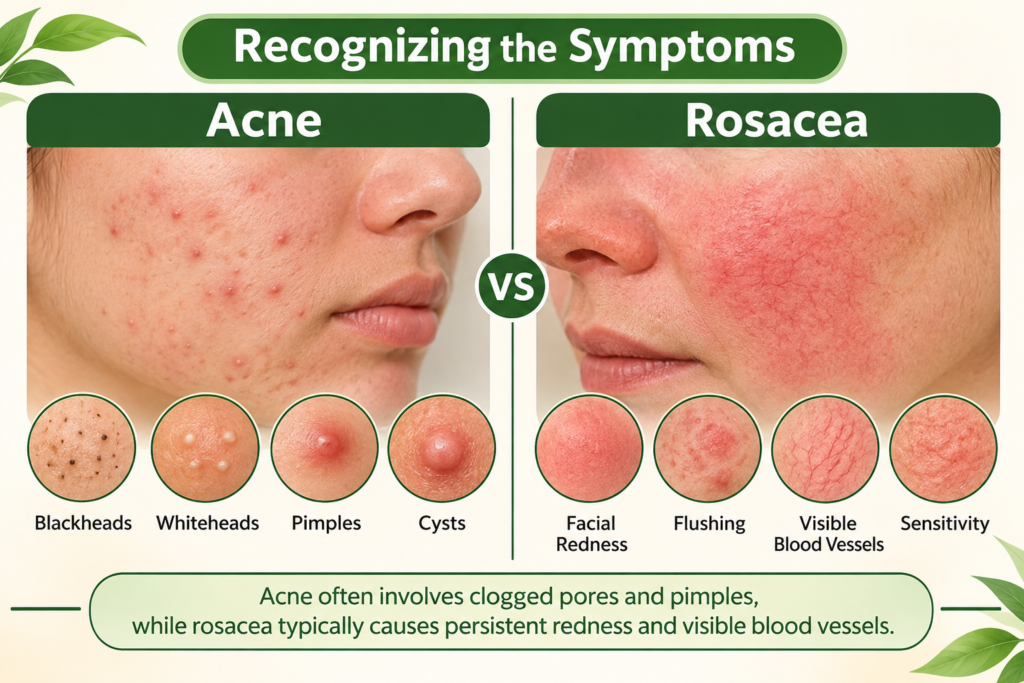
One of the easiest ways to understand acne vs rosacea is to look at how each condition appears on the skin. Although both can cause red bumps, their symptoms are not exactly the same.
Understanding the symptoms of rosacea vs acne can help you notice whether your skin changes are linked to clogged pores or persistent facial inflammation.
Common Symptoms of Acne
Acne usually develops as clogged pores and inflamed blemishes. Its symptoms may include:
- Blackheads and whiteheads: These are common signs of clogged pores and are among the clearest features of acne.
- Red pimples: Inflamed bumps may develop around clogged hair follicles.
- Pus-filled spots: Some breakouts develop white or yellow centers.
- Deep and painful bumps: Severe acne may cause nodules and cysts beneath the skin.
- Oily skin: Increased sebum production can contribute to clogged pores.
- Dark spots and scars: Some breakouts leave marks or permanent scars after healing.
Acne can appear in different areas of the body, including the forehead, cheeks, chin, chest, shoulders, and back. Its appearance may change depending on its severity.
Common Symptoms of Rosacea
When comparing the symptoms of rosacea vs acne, pay attention to flushing, visible blood vessels, and skin sensitivity, as these are more commonly associated with rosacea.
Rosacea mainly affects the face and often causes changes that remain visible even when acne-like bumps are not present.
Common symptoms include:
- Persistent facial redness: The cheeks, nose, chin, and forehead may appear red or discolored for long periods.
- Frequent flushing: The face may suddenly feel warm and change color after exposure to certain triggers.
- Visible blood vessels: Small blood vessels may become enlarged and noticeable on the cheeks and nose.
- Acne-like bumps: Red bumps and pus-filled spots may develop, making rosacea look like acne.
- Burning and stinging: The skin may feel hot, uncomfortable, or irritated.
- Dry and sensitive skin: Some people experience roughness, dryness, and reactions to skincare products.
- Eye irritation: Ocular rosacea may cause dry, watery, bloodshot, or uncomfortable eyes.
The symptoms of rosacea vs acne may overlap, but the presence of blackheads and whiteheads is an important clue when distinguishing between them.
Rosacea can appear differently across skin tones. On lighter skin, it may look pink or red, while on darker skin, it may appear violet, brown, or as a subtle change in skin color. Warmth, swelling, and sensitivity may also provide clues.
Causes of Acne vs. Rosacea
Understanding the causes of acne vs rosacea is important because the two conditions develop through different processes. Some factors may overlap, but they should not be treated as the same problem.
Understanding acne rosacea causes requires looking at the different processes that contribute to each condition.
What Causes Acne?
Hormonal changes and excess oil production are among the common factors discussed when exploring acne rosacea causes.
Acne develops when hair follicles become blocked with oil and dead skin cells. This creates an environment where inflammation and the activity of acne-associated bacteria can contribute to breakouts.
Common factors that contribute to acne include:
Excess oil production
The skin naturally produces oil to maintain moisture. However, excess sebum can combine with dead skin cells and block hair follicles, increasing the chance of breakouts.
Dead skin cell buildup
Dead skin cells normally shed from the surface of the skin. When they accumulate inside hair follicles, they can contribute to clogged pores and blackheads or whiteheads.
Hormonal changes
Hormonal changes during puberty, menstruation, pregnancy, and other stages of life can increase oil production. This may contribute to recurring acne.
Bacterial activity and inflammation
Cutibacterium acnes is a bacterium naturally found on the skin. Changes in the follicle environment can allow it to contribute to inflammation and acne lesions.
Genetics
A family history of acne may increase the likelihood of developing the condition. Genetics can influence oil production and how the skin responds to inflammation.
Certain medications and skincare products
Some medicines and heavy or pore-clogging skincare products may contribute to acne in certain individuals.
What Causes Rosacea?
In contrast, acne rosacea causes also involve inflammatory responses and changes in facial blood vessel activity.
The exact causes of rosacea are still being studied. Researchers believe that several factors may work together to contribute to this condition.
Important contributing factors include:
Inflammatory responses
An abnormal or overactive inflammatory response may contribute to facial redness, swelling, and acne-like bumps.
Changes in blood vessels
The small blood vessels in the face may react strongly to heat, sunlight, and other triggers. Repeated flushing can contribute to persistent redness and visible blood vessels.
Genetic factors
Rosacea may run in families. Having relatives with the condition can increase the likelihood of developing it.
These contributing factors help explain why acne rosacea causes can differ from one person to another.
Skin barrier sensitivity
People with rosacea often have sensitive skin that reacts easily to skincare products, temperature changes, and environmental conditions. A weakened skin barrier may contribute to irritation and discomfort.
Environmental factors
Sun exposure, heat, wind, and temperature changes may worsen symptoms in people who are already prone to rosacea.
When comparing acne rosacea causes, remember that acne is strongly associated with clogged hair follicles, while rosacea involves inflammatory and vascular changes. Rosacea is not simply another type of acne.
Common Rosacea Triggers
Although triggers do not necessarily cause rosacea, they can make existing symptoms more noticeable. Identifying personal triggers may help people reduce the frequency or intensity of flare-ups.
Common rosacea triggers include:
- Sun exposure: Ultraviolet radiation and sunlight can worsen facial redness and trigger flare-ups.
- Hot weather: High temperatures may increase flushing and skin discomfort.
- Spicy foods: Certain spicy meals can cause facial warmth and flushing.
- Hot drinks: Tea, coffee, and other hot beverages may trigger symptoms because of their temperature.
- Alcohol: Alcoholic drinks can cause flushing in some people with rosacea.
- Emotional stress: Anxiety, embarrassment, and other emotional changes may trigger facial flushing.
- Physical exercise: Intense exercise can increase body temperature and make facial redness more noticeable.
- Skincare products: Fragrances, harsh cleansers, and irritating ingredients may worsen skin sensitivity.
Not everyone reacts to the same triggers. Keeping a simple record of flare-ups can help identify personal patterns.
Acne vs. Rosacea: 7 Key Differences
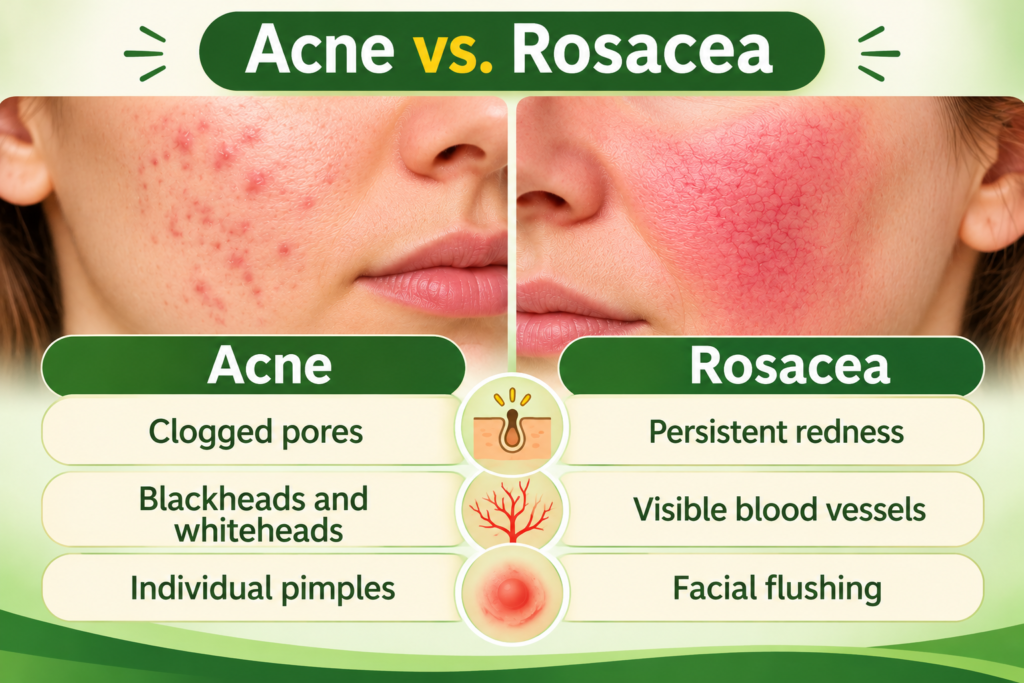
Although both conditions can cause facial bumps and inflammation, several features can help distinguish them.
Understanding acne and rosacea differences starts with recognizing how their bumps, redness, and affected areas vary.
Here are the most important acne and rosacea differences:
| Feature | Acne | Rosacea |
| Main cause | Clogged hair follicles and inflammation | Chronic inflammatory and vascular changes |
| Blackheads | Common | Generally absent |
| Whiteheads | Common | Generally absent |
| Facial redness | Usually around individual breakouts | May affect larger areas of the face |
| Visible blood vessels | Not typical | Common |
| Skin sensitivity | Can occur | Often prominent |
| Common locations | Face, chest, shoulders, and back | Mainly cheeks, nose, chin, and forehead |
| Flushing | Not a defining feature | Common |
| Eye symptoms | Not typical | Can occur |
| Skin texture | May include clogged pores and acne scars | May include dryness, swelling, or thickening |
These acne and rosacea differences are useful clues, especially when facial breakouts and redness appear together.
The most noticeable acne and rosacea differences often involve clogged pores, persistent redness, and visible blood vessels.
Different Types of Bumps
Acne commonly produces blackheads, whiteheads, pimples, and deeper lesions. Rosacea may also cause red bumps and pus-filled spots, but it generally does not produce blackheads or whiteheads.
Facial Redness
Acne usually causes redness around individual inflamed spots. Rosacea can cause redness across larger areas of the face, particularly the cheeks and nose.
These acne and rosacea differences can make it easier to distinguish ordinary acne-related inflammation from rosacea-related facial redness.
Visible Blood Vessels
Enlarged or visible small blood vessels are a common sign of rosacea. They are not usually associated with ordinary acne.
Skin Sensitivity
People with rosacea often experience burning, stinging, and irritation when using certain skincare products. Acne-prone skin can also be sensitive, especially during treatment, but this is not a defining feature of acne.
Areas of the Body Affected
Acne can develop on several parts of the body, including the face, chest, shoulders, and back. Rosacea mainly affects the central face.
Facial Flushing
Frequent flushing is an important feature of rosacea. It may occur after sun exposure, exercise, emotional stress, or consuming hot drinks. Flushing is not a typical defining symptom of acne.
Eye Problems
Rosacea can affect the eyes, causing dryness, irritation, redness, and swollen eyelids. Ordinary acne does not usually cause these symptoms.
Recognizing these acne and rosacea differences is helpful, but a professional examination is still important when symptoms overlap.
These features can help explain the symptoms of rosacea vs acne, but they cannot confirm a diagnosis on their own.
Can You Have Acne and Rosacea at the Same Time?
Yes. Although acne and rosacea are different skin conditions, a person can experience both at the same time.
For example, someone may have blackheads and whiteheads caused by acne while also experiencing persistent redness and visible blood vessels associated with rosacea.
This overlap can make it difficult to understand what is happening to the skin. Some people may assume that every facial bump is acne, while others may mistake all redness and inflammation for rosacea.
When both conditions occur together, each may require a different approach to care. Using products designed only for acne may irritate rosacea-prone skin, while ignoring clogged pores may allow acne to continue developing.
If you notice a combination of recurring breakouts, facial redness, flushing, and sensitivity, consider getting your skin assessed by a dermatologist.
Why Is It Important to Identify the Correct Skin Condition?
Understanding the acne and rosacea differences is important because both conditions require different treatment approaches.
Products that work well for acne may not be suitable for rosacea-prone skin. For example, strong exfoliants and certain acne treatments can cause dryness, burning, or irritation in people with sensitive skin.
On the other hand, rosacea treatments may not address clogged pores, blackheads, or other typical acne symptoms.
Correct identification can help with:
- Choosing skincare products that suit your skin condition.
- Avoiding unnecessary irritation from unsuitable products.
- Managing recurring inflammation and breakouts.
- Reducing the risk of acne-related scarring.
- Identifying symptoms that may require medical attention.
A dermatologist can examine your skin, review your symptoms, and recommend an appropriate treatment plan. There is no single test that confirms every case of rosacea, so diagnosis is usually based on clinical examination and medical history.
When Should You See a Dermatologist?
Occasional pimples and temporary redness are common, but persistent or worsening skin changes should not be ignored.
Consider consulting a dermatologist if you experience:
- Frequent facial redness that does not settle.
- Recurring pimples that do not improve with basic skincare.
- Painful or deep acne lesions.
- Visible blood vessels around the cheeks and nose.
- Burning, stinging, or unusual skin sensitivity.
- Repeated flare-ups after exposure to heat or sunlight.
- Persistent eye redness, dryness, or irritation.
Eye pain, light sensitivity, or changes in vision need prompt medical assessment. Rosacea-related eye problems should not be left untreated.
A professional assessment can help determine whether you have acne, rosacea, or both conditions. It can also help rule out other skin problems that may cause similar symptoms.
Frequently Asked Questions
How can you tell if you have acne or rosacea?
Blackheads and whiteheads are common signs of acne, while persistent facial redness, flushing, visible blood vessels, and sensitive skin are more suggestive of rosacea. However, both conditions can cause acne-like bumps. A dermatologist can help identify the correct condition.
Does rosacea cause pimples like acne?
Yes. Rosacea can cause red bumps and pus-filled spots that resemble acne. However, these breakouts generally occur without the blackheads and whiteheads commonly seen in acne.
What is the biggest difference between acne and rosacea?
The biggest difference is how the conditions develop and appear. Acne involves clogged hair follicles, while rosacea is a chronic inflammatory condition that often causes persistent facial redness, flushing, and visible blood vessels.
Can rosacea turn into acne?
No. Rosacea does not turn into acne because they are separate skin conditions. However, a person can develop both conditions at the same time.
Can acne and rosacea occur together?
Yes. Some people experience acne and rosacea together. They may have typical acne lesions, such as blackheads and whiteheads, along with rosacea symptoms such as facial redness and flushing.
Does rosacea cause permanent facial redness?
Rosacea can cause long-lasting facial redness. In some people, the redness becomes more persistent over time. Appropriate treatment and trigger management can help control symptoms, although rosacea currently has no permanent cure.
What triggers rosacea flare-ups?
Common triggers include sunlight, hot weather, spicy foods, hot beverages, alcohol, stress, exercise, and irritating skincare products. Triggers vary from person to person.
Final Thoughts
Acne and rosacea can look similar, but they are two different skin conditions with distinct symptoms and causes. Acne mainly develops when hair follicles become clogged with oil and dead skin cells, while rosacea is associated with facial inflammation, flushing, and changes in blood vessels.
Understanding acne vs rosacea can help you recognize common warning signs and make better decisions about your skincare routine. Pay attention to recurring breakouts, persistent redness, skin sensitivity, and other changes that may indicate an underlying skin condition.
If you are unsure about your symptoms, seek professional advice instead of relying on self-diagnosis or trying multiple treatments without guidance.
At Bless Homeopathy, we believe in helping people understand their skin concerns and make informed decisions about their health. Learning about your skin condition is an important first step toward choosing appropriate care.
Explore more helpful information about skin health and skincare in our skin health and wellness blogs.